

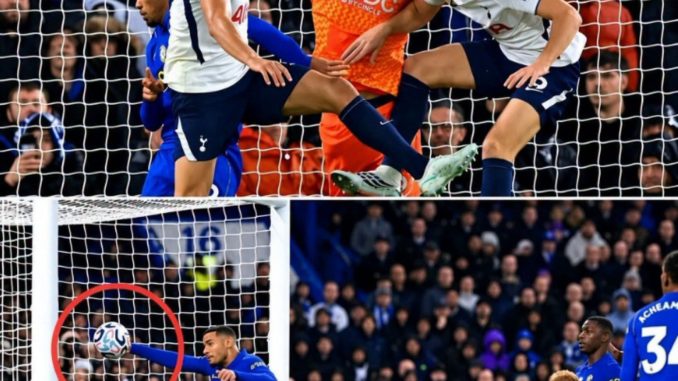

Chelsea Keep Making the SAME Set-Piece Mistake! Is Xabi Alonso to Blame?
Chelsea have a defensive problem that deserves serious attention, and it is becoming increasingly difficult for supporters to ignore.
The Blues continue to face questions over their defending from set pieces, particularly when opponents find space for a free header inside the six-yard box. For a team aiming to compete at the highest level, repeatedly allowing attackers to get into dangerous positions is a worrying sign.
This is not simply about conceding a goal. It is about understanding why the same type of opportunity keeps appearing and what must change to prevent it from happening again.
Xabi Alonso and his coaching staff must examine the problem carefully. If Chelsea want to become a more consistent team, their defending during corners and free kicks needs to be reliable, organised and disciplined.
The big question is this: Are Chelsea suffering because of poor marking, tactical disorganisation, or a lack of authority in the goalkeeper’s area?
Chelsea’s Set-Piece Defending Is Becoming a Serious Concern
There is a frustrating feeling when a team repeatedly gives opponents the opportunity to attack a dangerous delivery without facing enough pressure.
That is the concern surrounding Chelsea’s set-piece defending.
When an opponent delivers a corner or free kick into the penalty area, every Chelsea player should understand their responsibility. Someone must track the dangerous runner, someone must attack the ball, and the goalkeeper must know whether to come out or remain on the goal line.
When those responsibilities are unclear, even an ordinary delivery can become a major threat.
A free header inside the six-yard box is particularly dangerous because the attacker has an opportunity to direct the ball towards goal from close range. The goalkeeper may have very little time to react, especially when the delivery has pace or the attacker makes a well-timed run.
Chelsea cannot afford to treat these situations as isolated mistakes without investigating the pattern behind them.
The coaching staff need to identify whether opponents are repeatedly exploiting the same space, whether defenders are losing their markers, or whether the overall defensive system is failing to protect the most dangerous areas.
Until the cause is understood, the same problem could continue to return.
Xabi Alonso Must Take Responsibility for Finding a Solution
Every manager wants to see his team defend with confidence, particularly in situations that can be prepared for on the training ground.
Set pieces are an important part of modern football. Teams study their opponents, organise their defensive assignments and practise how to respond to different types of delivery.
That is why Chelsea’s coaching staff must take a close look at what is happening.
Alonso is responsible for ensuring that his team has a clear defensive structure. The set-piece coach also has an important role in preparing the players, identifying weaknesses and developing solutions.
However, responsibility does not automatically mean that one person is entirely at fault for every goal conceded. Players must execute their assignments, defenders must communicate, and the goalkeeper must make the right decisions.
The important thing is that the entire coaching team takes the problem seriously.
If Chelsea continue to allow attackers to meet deliveries with little pressure, simply telling the defenders to concentrate harder may not be enough. The team may need to adjust its marking system, positioning, player assignments or goalkeeper support.
Alonso must assess the evidence, identify the weakness and make the necessary changes.
Chelsea supporters have every reason to expect visible improvement in an area where preparation and organisation can make a significant difference.
Is Poor Marking the Real Problem?
One possible explanation is that Chelsea are not tracking their opponents effectively enough.
During corners and free kicks, attackers often use clever movement to escape their markers. Some make runs towards the near post, while others attack the far post or move into central positions where they can meet the ball.
If defenders lose sight of their opponents, hesitate at the crucial moment or fail to follow a runner, a dangerous opportunity can develop quickly.
Chelsea must be alert to those movements.
Defenders need to know who they are responsible for, when to challenge for the ball and how to react when an opponent changes direction. Communication is especially important when several players are competing for the same space.
But marking is not always the only explanation.
Even when a defender is close to an attacker, the defensive system can still fail if the delivery reaches the wrong area or if the player responsible for challenging the ball does not attack it decisively.
That is why the coaching staff should review the entire sequence rather than blame one defender simply because an opponent scored.
If the problem is individual marking, Chelsea must improve concentration and responsibility. If the problem is structural, the solution must come from the team’s overall organisation.
Should Chelsea Change Their System to Protect the Goalkeeper?
Another question concerns the goalkeeper’s role when Chelsea defend crosses and set pieces.
Goalkeepers must judge whether they can reach a delivery before an attacker. Coming off the line at the wrong moment can leave the goal exposed, but staying back when the ball is reachable can allow opponents to attack it without a challenge.
Those decisions depend on the height and speed of the delivery, the goalkeeper’s position, the movement of the players and the amount of traffic inside the penalty area.
If Chelsea’s goalkeeper is struggling to dominate aerial situations, the answer should not automatically be to blame him.
The team may need to provide better protection around the six-yard box, prevent opponents from blocking the goalkeeper’s movement and ensure that defenders challenge the first ball more aggressively.
The goalkeeper must also communicate clearly with the defenders and make decisive decisions when coming to claim a cross.
However, there is an important distinction between a goalkeeper making a mistake and a goalkeeper being left exposed by poor defensive organisation.
Chelsea need to establish which situation is occurring before deciding what must change.
A well-organised defence should make the goalkeeper’s job easier, not leave him facing repeated close-range headers without adequate protection.
Chelsea Need Better Organisation Inside the Six-Yard Box
The six-yard box is one of the most important areas to protect when defending corners and dangerous free kicks.
Allowing an opponent to attack a delivery freely from this area puts enormous pressure on the goalkeeper and the entire defensive line.
Chelsea should review their positioning before the ball is delivered, the way defenders react when the delivery is in the air and whether enough players are protecting the most dangerous spaces.
The coaching staff also need to consider how their marking responsibilities work together.
A zonal system requires players to defend designated spaces and attack the ball when it enters their zones. A man-marking system requires players to stay connected to their opponents and prevent them from reaching dangerous positions. Some teams use a combination of both approaches.
Neither system guarantees success on its own. The important factor is whether the players understand their responsibilities and carry them out effectively.
If Chelsea’s current approach is leaving attackers free inside the six-yard box, Alonso and his set-piece coach must consider whether adjustments are necessary.
That could mean changing individual assignments, improving communication, positioning stronger aerial players in key areas or altering how the goalkeeper is protected.
The objective should be simple: make it harder for opponents to get a clean header at goal.
Repeated Defensive Mistakes Could Cost Chelsea Valuable Points
In the Premier League, small details can decide matches.
A team can create chances, dominate possession and play attractive football, but poor defending during a corner or free kick can undo much of that work.
Set-piece goals can be particularly costly because they often come from situations that teams have time to prepare for. Opponents know that a well-delivered ball into the right area can create an opportunity even against a team that defends well in open play.
For Chelsea, the danger is not just the individual goal conceded. It is the possibility that opponents begin to recognise and deliberately target a weakness.
If rival teams believe they can repeatedly create free headers against Chelsea, they may focus more of their attacking preparation on corners and dangerous free kicks.
That would put additional pressure on the defence and make every set piece an uncomfortable moment for supporters.
Chelsea must respond before the issue becomes a recurring disadvantage in tight matches.
Improving set-piece defending does not necessarily require a complete tactical overhaul. Sometimes, better positioning, clearer responsibilities, more effective communication and regular practice can make a major difference.
But those improvements must be visible on the pitch.
What Should Xabi Alonso and His Set-Piece Coach Change?
Chelsea need a practical solution rather than another discussion after conceding a goal.
First, the coaching staff should review the footage of recent set-piece situations and identify where the defensive structure breaks down. They need to establish whether the problem starts with the delivery, the marking, the first contact or the goalkeeper’s decision.
Second, every player must understand his role. There should be no confusion about who is tracking the main aerial threat, who is protecting the near post and who is responsible for attacking the ball.
Third, Chelsea must improve their physical and tactical response to deliveries. Defenders need to be proactive, maintain their positioning and avoid allowing opponents to build momentum for an uncontested jump.
Fourth, the goalkeeper and defensive line must communicate clearly. If the goalkeeper intends to claim a delivery, the defenders need to understand how to support that decision and avoid leaving dangerous spaces unprotected.
Finally, the team must practise these situations consistently and assess whether the changes are working during matches.
The goal is not to eliminate every set-piece chance. That is unrealistic in a competitive league. The goal is to stop opponents from repeatedly receiving clear, uncontested headers in the most dangerous part of the penalty area.
Chelsea Fans Have Every Right to Demand Improvement
Chelsea supporters understand that no defence will be perfect throughout an entire season.
Mistakes happen, opponents score excellent goals and sometimes a delivery is simply too good to defend.
However, fans are entitled to question a pattern when the same type of defensive weakness appears repeatedly.
The concern is not necessarily that Chelsea concede from every corner or free kick. It is that a free header inside the six-yard box is the kind of opportunity a well-prepared defence should work hard to prevent.
Alonso deserves the opportunity to analyse the problem and improve the team’s organisation, but the coaching staff must also be willing to make changes when the current approach is not working.
Chelsea’s ambitions demand greater consistency in both boxes. Defending set pieces may not always attract the same attention as goals, transfers or tactical formations, but it can have a major influence on results.
The next step is to identify the real cause and address it properly.
Leave a Reply