

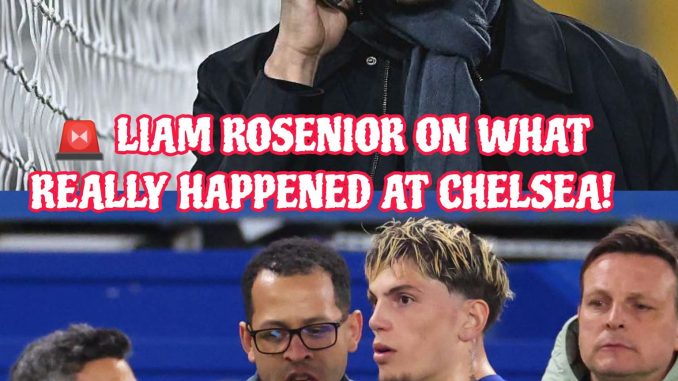

Liam Rosenior Breaks Silence on Chelsea Nightmare: “One Day, I’ll Reveal What Really Happened!”
Chelsea supporters may have thought they had heard everything about Liam Rosenior’s difficult spell at Stamford Bridge, but the former Blues boss has now made comments that could reopen conversations about what happened during his time at the club.
Rosenior has spoken publicly about the pressure, media attention and personal criticism he experienced while working at Chelsea. Although he acknowledged that the team enjoyed a positive run of results, he believes the attention surrounding the club eventually became something much bigger than football.
His comments are particularly interesting because he has suggested that there is still much more to the story than he is currently willing to reveal.
In an interview, Rosenior made it clear that he was unhappy with the way certain aspects of his personality, appearance and coaching methods became subjects of public discussion.
And one particular incident involving a handwritten tactical instruction to Alejandro Garnacho against Paris Saint-Germain appears to have stayed in his memory.
Liam Rosenior Opens Up About His Difficult Chelsea Experience
Managing Chelsea is never an easy responsibility. The club attracts enormous attention, and every decision made by a manager can quickly become a major talking point among supporters, journalists and football commentators.
For Rosenior, however, the criticism appeared to go beyond his football decisions.
He explained that Chelsea had enjoyed a run of results that many other clubs would have considered successful. Despite that, he felt the level of media scrutiny continued to increase.
According to Rosenior, what started as ordinary football criticism gradually developed into something more personal.
He recalled how his tactical decisions, clothing and communication style became subjects of jokes and criticism.
His frustration was clear when he explained that he did not believe he deserved to be treated as a joke simply because of the way he managed certain situations.
For a manager trying to establish himself at one of England’s biggest football clubs, such attention can create an uncomfortable environment.
Rosenior’s comments also raise an interesting question about the expectations placed on Chelsea managers and whether results alone are enough to earn them patience.
The Alejandro Garnacho Tactical Note That Became a Media Talking Point
One of the moments Rosenior specifically mentioned involved Alejandro Garnacho during Chelsea’s match against Paris Saint-Germain.
Chelsea were down to ten men, and the manager needed to communicate tactical instructions quickly to help his players understand what was required on the pitch.
Rather than making a long speech, Rosenior reportedly wrote down his instructions on a piece of paper and passed the message to Garnacho.
It was a practical coaching decision in a difficult match situation.
However, the handwritten note quickly became a subject of discussion in the media.
Instead of focusing entirely on the tactical thinking behind the decision, Rosenior felt that people made fun of the way he communicated with his player.
For a manager, communication is an important part of football management. Whether instructions are delivered verbally, through substitutions, tactical boards or handwritten notes, the main objective is to help players understand their responsibilities.
The incident became one of the examples Rosenior used to explain why he felt the attention surrounding him had become unnecessarily personal.
His frustration suggests that he believed some sections of the media were more interested in mocking his methods than understanding the circumstances in which those decisions were made.
“The Clothes I Wore Became a Joke, the Way I Spoke Too”
Perhaps the most revealing part of Rosenior’s comments was his complaint about the attention given to his personal appearance and communication style.
He explained that the clothes he wore became a joke and even the way he spoke attracted criticism.
This is an important detail because it shows that his frustration was not limited to football-related disagreements.
Managers are naturally judged on their results, tactical decisions, team selection and ability to handle difficult situations. That comes with the responsibility of managing a high-profile club.
However, Rosenior appeared to feel that the criticism crossed a line when people began focusing on things that had little to do with his ability to coach a football team.
His response was direct:
“I’m not a joke!”
Those four words captured his frustration with the way he believed he was being portrayed.
For someone working under the intense spotlight of Chelsea, public perception can become almost as important as what happens on the training pitch.
Every press conference, touchline reaction, tactical adjustment and post-match comment can become a subject of debate.
Rosenior’s experience highlights how difficult it can be for a manager to maintain focus when the conversation around him becomes increasingly personal.
Why Rosenior Says Chelsea Was Different From Other Clubs
Another interesting part of his interview was his comparison between Chelsea and other football clubs.
Rosenior suggested that many clubs would have been satisfied with the run of results Chelsea experienced during that period.
However, he felt the situation at Stamford Bridge was different because success did not necessarily reduce the pressure surrounding him.
Instead, he described the media attention as a snowball effect.
The more attention he received, the more different aspects of his personality and management style became subjects of public discussion.
Chelsea is one of the most closely followed clubs in English football. Its history, expectations, financial strength and worldwide fanbase mean that managers rarely enjoy long periods away from public scrutiny.
Supporters want results, attractive football, trophies and a clear direction for the team.
When things go well, expectations can rise quickly. When things go wrong, criticism can become even louder.
Rosenior’s comments offer an insight into how he personally experienced that environment.
It also raises a wider debate about whether football managers are given enough room to work without every small decision becoming a national talking point.
“One Day, I’ll Tell You What Really Happened at Chelsea!”
The most intriguing part of Rosenior’s interview came towards the end.
He suggested that he was speaking about these experiences publicly for the first time and did not intend to discuss them extensively again anytime soon.
But he left supporters with a statement that is likely to attract attention.
“One day, I’ll tell you what really happened.”
That comment immediately creates curiosity about what he believes people still do not know about his Chelsea experience.
Was there more pressure behind the scenes than supporters realised? Were there situations that he felt unable to discuss while he was at the club? Or does he simply believe that the public misunderstood what he was trying to do?
For now, those questions remain unanswered.
It is important not to assume that his comments confirm any particular disagreement or behind-the-scenes controversy. Rosenior has not provided all the details, and his promise to speak more openly one day leaves plenty of room for speculation.
Nevertheless, his words suggest that he believes there is another side to the story that has not yet been fully explained.
That is what makes this interview particularly interesting for Chelsea supporters.
What Does This Mean for Chelsea and Its Supporters?
Rosenior’s comments have reopened an important discussion about the pressure that comes with managing Chelsea.
At Stamford Bridge, managers are expected to deliver results while also dealing with enormous expectations from supporters and the media.
A manager can win matches and still find himself facing criticism over his tactics, substitutions, press conferences or personality.
Rosenior clearly believes that some of the attention he received went beyond legitimate football analysis.
His comments also serve as a reminder that there is often a difference between what supporters see publicly and what a manager experiences during his time at a club.
However, until he decides to explain exactly what he meant by revealing what really happened, Chelsea fans can only judge the situation based on the information he has shared.
One thing is certain: his statement has given supporters another reason to discuss his time at Stamford Bridge.
And if Rosenior eventually decides to reveal more details, his account could provide further insight into how he experienced his Chelsea spell.
Leave a Reply