

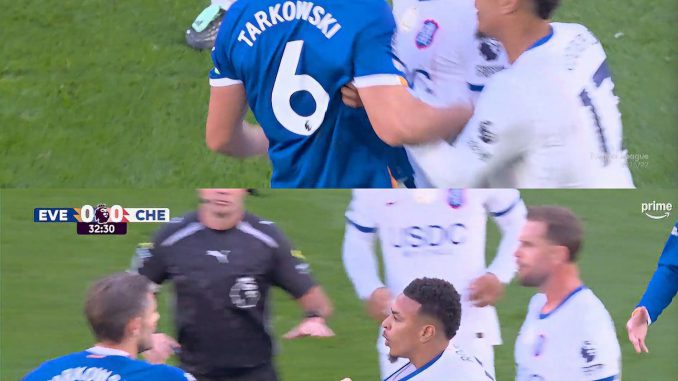

Morgan Rogers Defends Moisés Caicedo After Clash With James Tarkowski as Chelsea Teammate Loyalty Takes Centre Stage
Morgan Rogers has made his position clear following the reported clash between Moisés Caicedo and James Tarkowski, stressing that physical football should never become an excuse for disrespect or intimidation.
The Chelsea-related discussion has drawn attention to an important issue in football: the difference between playing aggressively and crossing the line. While physical battles are part of the modern game, players are expected to compete hard without losing respect for their opponents.
Rogers’ reported defence of Caicedo also highlights the importance of unity among teammates, especially when emotions rise during competitive matches.
Morgan Rogers Sends a Strong Message After the Caicedo and Tarkowski Clash
Football is a competitive sport, and physical challenges are part of what makes the Premier League so demanding. Players are constantly expected to win duels, protect possession and stand their ground against strong opponents.
However, the debate changes when a physical contest appears to go beyond normal competition.
Following the reported incident involving Caicedo and Everton defender James Tarkowski, Rogers’ stance centres on the need for players to understand where the line should be drawn.
The message is straightforward: strength and aggression have their place on the pitch, but respect must remain part of the game.
For players competing at the highest level, knowing how to handle pressure is just as important as winning individual battles. Emotions can rise quickly during a match, particularly when players feel that a teammate has been treated unfairly.
That is why incidents like this often generate discussion among supporters. Some fans believe strong challenges are simply part of football, while others argue that players must be held accountable when their actions go too far.
Why Morgan Rogers Is Standing Up for Moisés Caicedo
Teammate loyalty is one of the strongest themes in football. When a player believes someone from his team has been targeted or disrespected, the natural reaction may be to defend him.
That is the principle behind Rogers’ reported comments about Caicedo.
The Chelsea midfielder is known for competing in demanding midfield battles, where physical strength, quick decisions and the ability to win possession are essential. Players in his position regularly face pressure from opponents who want to disrupt their rhythm and prevent them from controlling the game.
But supporting a teammate does not necessarily mean encouraging confrontation. It can also mean demanding respect, keeping emotions under control and making sure the team remains focused on its objectives.
For Chelsea, maintaining unity is particularly important in matches where opponents attempt to make the game uncomfortable through aggressive pressing and physical challenges.
Rogers’ reported position sends a message that teammates should support one another while remaining focused on football rather than allowing an incident to become a distraction.
Physical Football Is Part of the Premier League, but Respect Still Matters
The Premier League has always been associated with intensity, fast transitions and demanding physical contests.
Midfielders are frequently challenged by opponents trying to win possession, defenders must stand firm against powerful attackers, and every loose ball can lead to a battle between players.
There is nothing wrong with that competitive edge. In many situations, it is exactly what supporters want to see.
However, there is an important distinction between a strong challenge and behaviour that opponents perceive as unnecessary or disrespectful.
A fair physical contest can demonstrate determination and courage. A confrontation that escalates unnecessarily can leave teammates distracted, create tension between players and take attention away from the match itself.
This is why discipline matters. Players must be able to compete aggressively without allowing frustration to dictate their decisions.
For Chelsea supporters, the question is not whether their players should be physically strong. It is whether they can combine that strength with composure, discipline and intelligent decision-making.
James Tarkowski and the Debate Over Aggressive Defending
James Tarkowski is an experienced defender whose role involves competing against powerful attackers, protecting his penalty area and dealing with dangerous situations under pressure.
Defenders are often judged on their willingness to make difficult challenges, win aerial duels and prevent opponents from creating scoring opportunities. In that environment, physical contact is unavoidable.
Nevertheless, experience does not remove the need for discipline. Every player, regardless of reputation or seniority, must follow the rules of the game.
The reported clash with Caicedo therefore raises a broader question about how players manage physical contests when emotions begin to rise.
Supporters may disagree about whether a particular challenge was fair, excessive or simply part of normal football. The circumstances of the incident, the available footage and any official disciplinary decision are important when assessing what actually happened.
Rather than assuming the worst about either player, the discussion should focus on the distinction between legitimate aggression and actions that cross the line.
That balance is essential if football is to retain its intensity without losing the respect that makes competition meaningful.
What This Means for Chelsea’s Team Spirit
Chelsea need their players to compete with confidence, particularly in matches where opponents attempt to unsettle them physically.
A united team is often better equipped to handle difficult moments because players understand their responsibilities and trust one another to respond in the right way.
When a teammate faces a difficult situation, support can make a difference. However, the most effective response is usually one that protects the team rather than creating another problem.
Chelsea must be able to defend their players, remain disciplined and return their attention to winning matches.
That approach is especially important for midfielders such as Caicedo, whose ability to win possession, break up attacks and protect the defence can be crucial to the team’s performance.
Allowing an individual confrontation to dominate the game could work against Chelsea’s interests. Remaining calm while continuing to compete is often the more effective way to respond.
The message associated with Rogers’ reported comments is therefore about more than loyalty. It is also about the responsibility players have to their teammates and the team as a whole.
Should Players Defend Their Teammates During Heated Football Matches?
There are two sides to this debate.
Some supporters believe players should always stand up for their teammates when they feel an opponent has crossed the line. They see that reaction as a sign of loyalty, character and togetherness.
Others argue that players must avoid becoming involved in unnecessary confrontations because doing so can lead to bookings, suspensions or a loss of concentration.
Both perspectives recognise the importance of protecting teammates, but they differ on how that support should be demonstrated.
A player can challenge an opponent’s behaviour, speak to the referee and demand fair treatment without allowing the situation to turn into a personal dispute.
For Chelsea, the ideal response is to combine team spirit with discipline. Players should never feel that they must accept disrespect, but they must also understand that their first responsibility is to help the team succeed.
Leave a Reply