

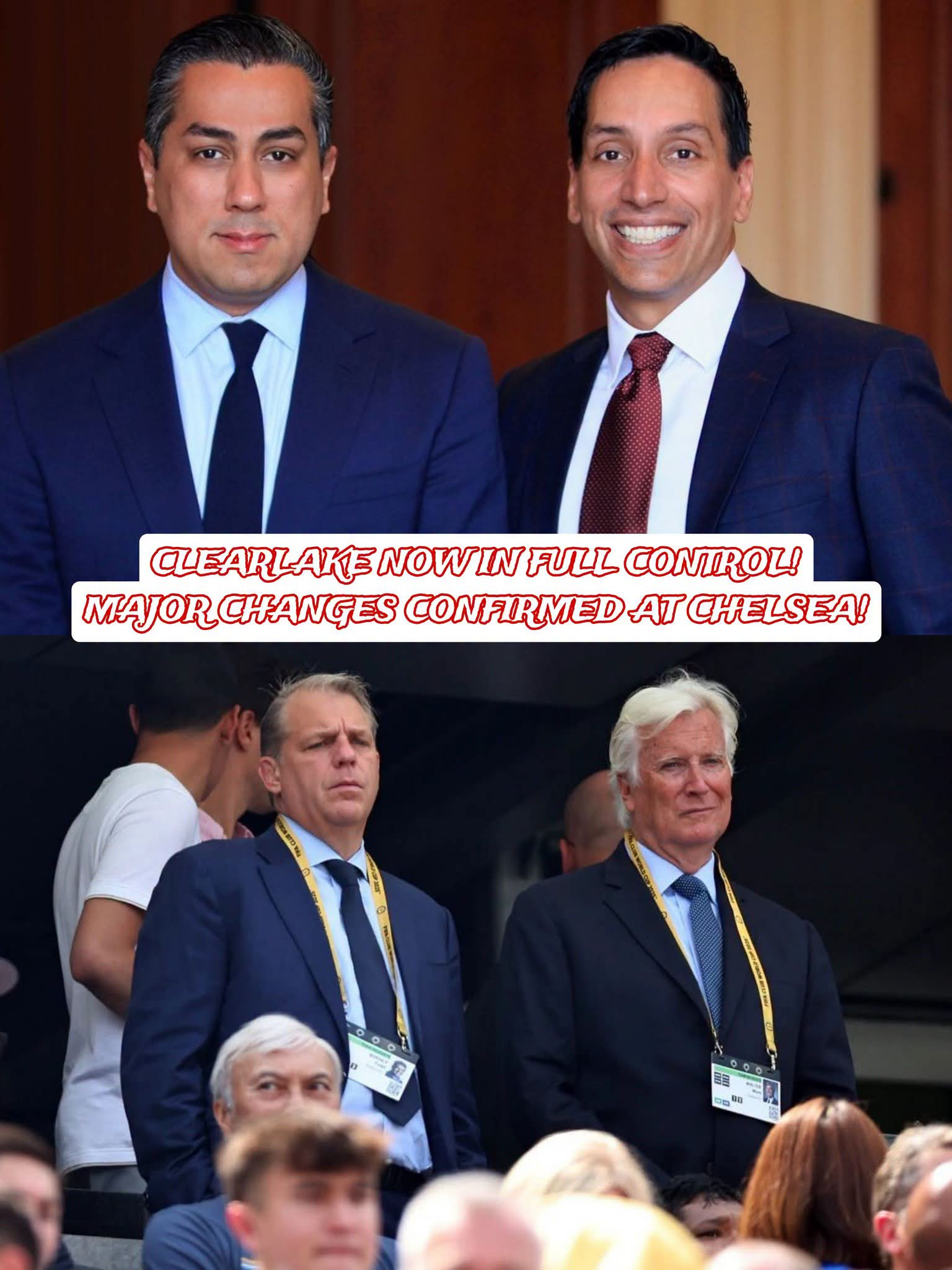

🚨🔵 Chelsea Ownership Changes Confirmed: Clearlake Takes Full Control — What Happens Next?
Chelsea have officially entered a new chapter at boardroom level after Clearlake Capital took full control of the club, bringing an end to the previous ownership structure that had been in place since the 2022 takeover.
The major change means Todd Boehly and Mark Walter have sold their ownership interests to Clearlake, while Boehly has also stepped down from his position as Chelsea chairman. Swiss businessman Hansjörg Wyss is also no longer part of the previous ownership arrangement, according to current reporting.
However, Chelsea fans may not need to expect a dramatic change in the way the club is being run.
According to Chelsea’s official announcement, the ownership transition will not lead to changes in the club’s day-to-day operations, leadership or overall strategy. Clearlake has also reaffirmed its commitment to continuing investment in Chelsea’s infrastructure, sporting performance and player development.
So, what exactly has changed at Chelsea, and what could it mean for the Blues moving forward?
Chelsea ownership changes: Clearlake now has full control
Since Chelsea were bought in 2022, the club operated under an ownership structure involving Clearlake Capital, Todd Boehly, Mark Walter and Hansjörg Wyss.
Clearlake was already the majority owner, holding about 61.5% of the club, while the other investors held minority stakes.
That arrangement has now changed.
Clearlake has acquired the ownership interests of Boehly and Walter, giving the investment firm full control of Chelsea Football Club. Boehly’s departure also brings his time as chairman to an end.
The change represents one of the biggest developments in Chelsea’s ownership story since the club was purchased from Roman Abramovich in 2022.
But despite the significance of the ownership change, Chelsea’s official statement has made it clear that supporters should not expect an immediate change to the club’s sporting direction.
Todd Boehly leaves Chelsea after four years
Todd Boehly became one of the most recognisable figures in Chelsea’s ownership group following the 2022 takeover.
He served as chairman and was closely associated with the club’s new era, which saw Chelsea invest heavily in the men’s team, women’s team, academy, training facilities and other areas of the football operation.
Chelsea’s official statement thanked Boehly for his contribution and described him as an important partner throughout the ownership period.
Boehly has also expressed confidence in Chelsea’s future under Clearlake’s leadership.
His departure therefore marks the end of one chapter, but it does not necessarily mean that Chelsea are abandoning the principles behind the project established since 2022.
What does Clearlake’s full control mean for Chelsea?
The biggest question for supporters is simple:
Will Chelsea change their strategy now that Clearlake has full control?
For now, the club’s answer is no.
Chelsea have confirmed that there will be no changes to day-to-day operations, leadership or strategy as a result of the ownership transition.
Clearlake has stated that its focus will remain on investment in:
- Sporting performance
- Player development
- Club infrastructure
- The men’s first team
- The women’s team
- Academy development
- Long-term success
That means the ownership change appears to be more about who has ultimate control rather than an immediate change in Chelsea’s footballing philosophy.
Chelsea’s focus on young players remains important
One of the most noticeable features of Chelsea’s post-2022 project has been the emphasis on young players and long-term squad development.
The club has invested heavily in emerging talent while also bringing in experienced players to strengthen the squad.
Chelsea’s official announcement highlighted continued investment in player development and academy pathways, suggesting that this part of the project remains important under Clearlake’s full control.
The challenge now will be turning that long-term investment into consistent results on the pitch.
For Chelsea supporters, trophies and Champions League football remain important measures of progress.
Xabi Alonso and Chelsea’s sporting project
The ownership change also comes at an interesting point in Chelsea’s sporting development.
Xabi Alonso is now leading the first-team project, while the club’s sporting leadership continues to work on building a squad capable of competing at the highest level.
There is currently no indication from Chelsea’s official announcement that Alonso’s position or the sporting strategy will be affected by the ownership transition.
In fact, Chelsea have explicitly stated that the club’s leadership and strategy will remain unchanged.
That means the focus can remain on what happens on the pitch rather than on another major restructuring behind the scenes.
Why this matters to Chelsea fans
Ownership changes at major football clubs can sometimes lead to changes in managers, recruitment strategies, sporting directors and long-term plans.
That does not appear to be the immediate situation at Chelsea.
Instead, Clearlake is taking the club forward with the existing project already established.
The biggest difference is that there is now one controlling ownership group rather than the previous shared ownership structure.
That could potentially make decision-making more straightforward, although how this develops over the coming seasons will ultimately be judged by the club’s actions and results.
What happens to Chelsea’s long-term ambitions?
Chelsea’s ambition remains centred around competing at the highest level of English and European football.
The club has invested significantly in its squad, academy, training infrastructure and sporting operation since the 2022 takeover.
Now that Clearlake has full control, attention will turn to whether those investments can translate into sustained success.
For Chelsea supporters, the key questions are likely to be:
Can Chelsea consistently qualify for the Champions League?
Can the club challenge for the Premier League title?
Can the current young squad develop into a team capable of competing for major trophies?
And perhaps most importantly:
Will Clearlake’s full control bring greater stability to Chelsea?
Those questions will only be answered over time.
Chelsea ownership has changed, but the project continues
The departure of Todd Boehly and Mark Walter represents a major change at Chelsea’s ownership level.
However, the club itself has made it clear that the transition should not be viewed as the beginning of an entirely new football project.
Clearlake was already the majority owner before the latest transaction and has now moved into full control.
The club says its day-to-day operations, leadership and strategy will remain unchanged.
That means Chelsea’s focus can remain on the football: developing players, improving the squad, competing for trophies and building a sustainable foundation for long-term success.
For supporters, the real test will not simply be who owns the club.
It will be what happens on the pitch.
The ownership structure has changed.
Leave a Reply